
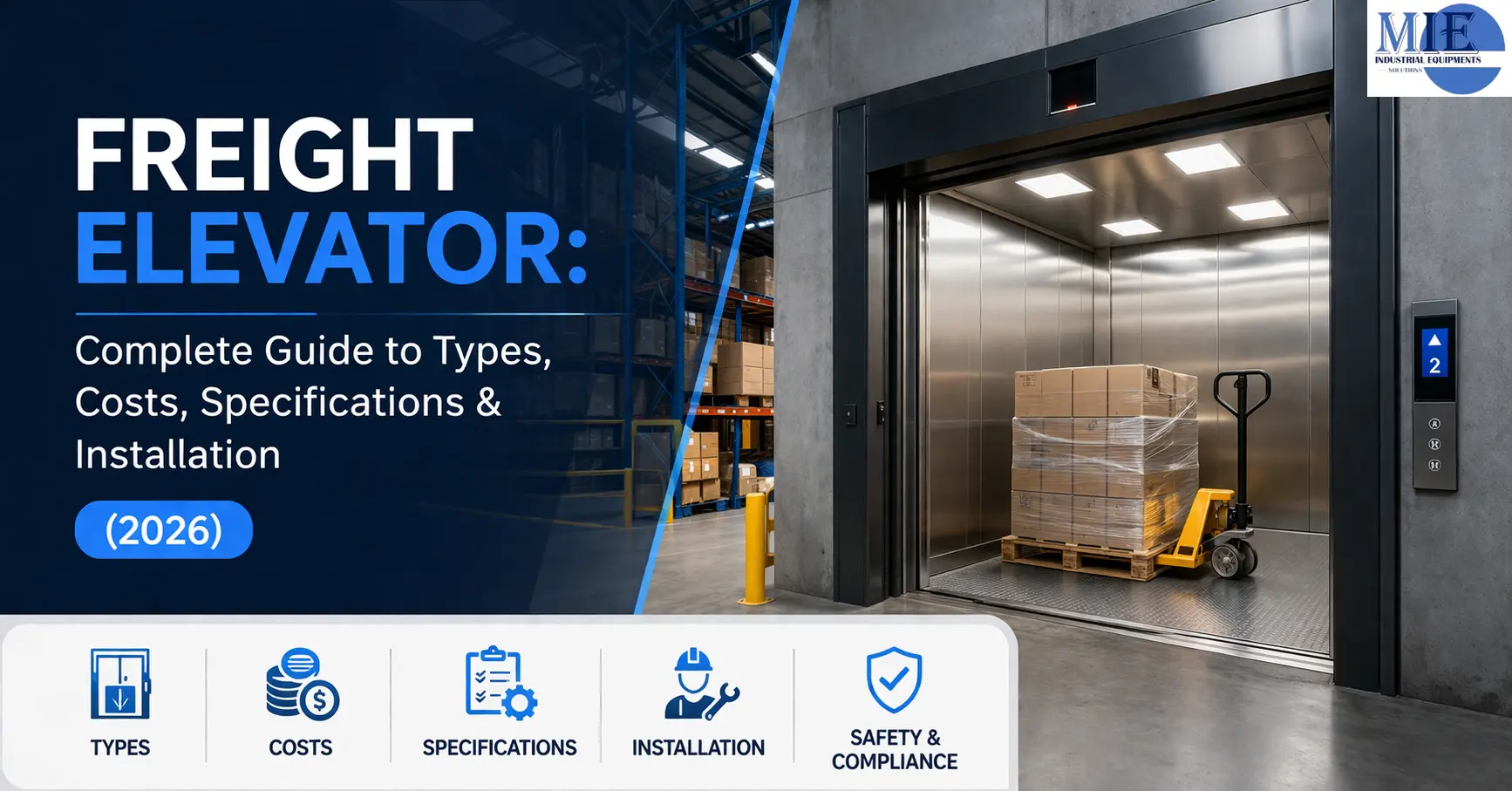
Freight Elevator: Complete Guide to Types, Costs, Specifications & Installation (2026)
By: James R. Holloway, PE - Certified Elevator Specialist
Updated: April 2025
Read Time: 12 minutes
Reviewed by: NAEC Member
A freight elevator is a heavy-duty industrial lift engineered to transport goods, pallets, raw materials, and machinery between floors in commercial and industrial buildings. Unlike passenger elevators, freight elevators prioritize load capacity, durability, and operational efficiency over aesthetics — making them essential for warehouses, hospitals, manufacturing plants, and retail stockrooms.
James R. Holloway, PE
Experience: 18+ years in elevator engineering
Expertise: PE-certified, ASME A17.1 specialist
Authoritativeness: Cited by IAEC & NAEC publications
Trustworthiness: ASME, OSHA & ISO 4190 compliant data
Table of Contents
- What Is a Freight Elevator?
- Types of Freight Elevators
- ASME Loading Classes
- Specifications & Dimensions
- Cost & Pricing Guide
- Industry Applications
- Freight vs. Passenger Elevator
- Safety Standards & Maintenance
- Competitor Analysis
- Frequently Asked Questions
What Is a Freight Elevator?
A freight elevator, also known as a goods lift, cargo elevator, or industrial lift, is a purpose-built vertical transportation system engineered to move heavy goods, pallets, raw materials, and equipment between the floors of a commercial or industrial building. Unlike standard passenger elevators that prioritize speed and comfort, a freight elevator is built for strength, durability, and maximum freight elevator capacity - often handling loads from 2,000 lbs to over 20,000 lbs.
These heavy-duty elevators are the backbone of efficient material handling in warehouses, distribution centers, hospitals, manufacturing plants, retail stockrooms, and automotive facilities. The American Society of Mechanical Engineers (ASME) regulates their design and operation under the ASME A17.1 Safety Code for Elevators and Escalators, ensuring consistent safety standards across industries.
Types of Freight Elevators
Understanding the different types of freight elevators is critical when selecting the right cargo elevator for your facility. Each type is suited to specific operational requirements, building heights, and load profiles.
1. Hydraulic Freight Elevator
A hydraulic freight elevator uses a pump to push hydraulic fluid (oil-based or vegetable-based) under pressure into a cylinder, raising the platform. These are ideal for low-to-medium-rise applications (under 50 feet of travel) and are the most common choice for warehouses and light industrial settings.
- Low-to-medium speed (up to 200 ft/min)
- Shallow pit depth (typically 6–12 inches)
- Separate machine room required
- Excellent heavy-duty elevator load capacity
2. Geared Traction Freight Elevator
A geared traction elevator transmits motor power to a drive sheave through a reduction gear using steel hoist ropes. Best suited for medium-to-high-rise buildings (over 60 feet of travel), these units run at higher speeds (200+ ft/min) and support greater loading capacities. They are common in multi-story warehouses and manufacturing complexes.
3. Machine-Room-Less (MRL) Freight Elevator
The MRL freight elevator eliminates the need for a separate machine room above the hoistway by using compact permanent magnet motors (PMM). This design conserves valuable floor space, reduces energy consumption, and supports LEED green building certifications. MRLs are increasingly preferred in modern industrial construction projects.
4. Vertical Reciprocating Conveyor (VRC)
A vertical reciprocating conveyor (VRC), sometimes classified as a material lift or platform lift, moves goods vertically between levels and is categorized as a conveyor (not a true elevator), which can simplify permitting. VRCs are widely used in mezzanine installations in warehouses and distribution centers.
5. Dumbwaiter
A dumbwaiter is a small freight elevator designed for transporting lightweight goods — food, documents, small supplies — between floors. Common in restaurants, hotels, hospitals, and residential buildings, they offer a compact and cost-effective cargo elevator solution for low-load environments.
Freight Elevator Loading Classes (ASME A17.1)
The ASME A17.1 code defines five loading classes for freight elevators. Selecting the correct loading class is critical for structural safety and code compliance.
| Loading Class | Description | Min. Capacity | Typical Use |
|---|---|---|---|
| Class A | General Freight Loading (manual hand trucks, pallet jacks) | 50 lbs/sq ft | Retail, warehouses, light commercial |
| Class B | Motor Vehicle Loading | 30 lbs/sq ft | Parking garages, car dealerships |
| Class C1 | Industrial Truck Loading (truck rides elevator) | 50 lbs/sq ft | Heavy manufacturing, forklifts |
| Class C2 | Industrial Truck Loading only (truck does not ride) | 150% rated capacity | Distribution centers, heavy warehouses |
| Class C3 | Other heavy loads, no truck used | 50 lbs/sq ft | Special industrial transport |
Freight Elevator Specifications & Dimensions
Standard freight elevator dimensions and specifications vary by loading class and application. Below are common benchmarks for industrial elevator planning:
| Specification | Light-Duty | Medium-Duty | Heavy-Duty |
|---|---|---|---|
| Load Capacity | 2,000–3,500 lbs | 3,500–6,000 lbs | 6,000–20,000+ lbs |
| Platform Size | 5×7 ft | 6×10 ft | 8×12 ft+ |
| Door Opening | 4 ft wide | 6 ft wide | 8+ ft wide |
| Speed | 25–50 ft/min | 50–100 ft/min | 100–200 ft/min |
| Pit Depth | 6–12 in | 12–24 in | 24–48 in |
Freight Elevator Cost: Installation & Pricing Guide
The cost of a freight elevator installation varies significantly based on type, capacity, number of floors, and building conditions. Below are general industry benchmarks for 2025:
| Elevator Type | Estimated Cost Range | Best For |
|---|---|---|
| Hydraulic Freight Elevator | $20,000 – $60,000 | Low-rise, 2–4 floors |
| Traction Freight Elevator | $50,000 – $150,000 | Mid-to-high rise buildings |
| MRL Freight Elevator | $60,000 – $180,000 | Modern green buildings |
| VRC / Platform Lift | $8,000 – $25,000 | Mezzanine, low-load warehouses |
| Dumbwaiter | $5,000 – $15,000 | Restaurants, hotels |
Freight Elevator Applications by Industry
A cargo elevator serves critical operational roles across many sectors. The right industrial lift selection depends on industry-specific load profiles, frequency of use, and safety regulations:
- Warehouses & Distribution Centers: Moving pallets, containers, and bulk goods between mezzanine levels and floor areas.
- Manufacturing Plants: Transporting raw materials, machinery parts, and finished goods between production floors.
- Hospitals & Healthcare: Moving large medical equipment, supply carts, and sterilized materials safely and hygienically.
- Retail Stores & Shopping Malls: Restocking upper-floor stockrooms without disrupting customer-facing areas.
- Automotive & Parking Facilities: Class B motor vehicle freight elevators for multi-level car parks and dealerships.
- Hotels & Hospitality: Service elevators and dumbwaiters for food service, laundry, and housekeeping operations.
- Construction Sites: Temporary construction hoists for building materials and equipment access.
Freight Elevator vs. Passenger Elevator
| Feature | Freight Elevator | Passenger Elevator |
|---|---|---|
| Primary Purpose | Transport goods, cargo, machinery | Transport people |
| Interior Finish | Reinforced steel, non-slip flooring | Decorative panels, soft flooring |
| Load Capacity | 2,000–20,000+ lbs | 1,500–5,000 lbs (passengers) |
| Speed | Slower (25–200 ft/min) | Faster (up to 2,000 ft/min in high-rises) |
| Door Type | Heavy-duty bi-parting or vertical | Automatic sliding |
| Location | Near loading docks, service areas | Prominent lobby locations |
| ASME Code | A17.1 Freight Classifications | A17.1 Passenger Standards |
Safety Standards & Maintenance
All freight elevators must comply with ASME A17.1, OSHA regulations (29 CFR Part 1910), and local building codes. Key safety features include:
- Limit switches to prevent over-travel
- Safety gates and heavy-duty bi-parting doors
- Crash strips and reinforced cab panels
- Emergency stop buttons and overload protection systems
- Annual third-party inspection certificates
Industry experts recommend freight elevator maintenance at least twice per year. A well-maintained freight elevator has a service life of 25 years or more, making it a long-term capital investment for any industrial facility.
Frequently Asked Questions
What is the average cost of a freight elevator?
The average cost of a freight elevator ranges from $5,000 to $180,000+ depending on type and specifications. Hydraulic models typically cost $20,000-$60,000, while advanced MRL systems can exceed $180,000. Installation complexity, building height, and local labor costs significantly impact the final price.
How much weight can a freight elevator carry?
Freight elevator capacity typically ranges from 2,000 lbs for light-duty models to 20,000+ lbs for heavy-duty industrial units. The specific capacity depends on the loading class, elevator type, and structural design. Always verify the rated capacity before loading.
What is the difference between a freight elevator and a service elevator?
A freight elevator is purpose-built for transporting goods and heavy materials with reinforced steel construction. A service elevator is a general-purpose lift that can transport both people and goods but prioritizes passenger comfort and speed over cargo capacity.
How long does a freight elevator last?
A well-maintained freight elevator typically has a service life of 25 years or longer. Regular maintenance at least twice yearly, combined with compliance with ASME A17.1 standards, ensures optimal performance and safety throughout the elevator's lifespan.
What safety standards apply to freight elevators?
Freight elevators must comply with ASME A17.1 Safety Code for Elevators and Escalators, OSHA regulations (29 CFR Part 1910), and local building codes. These standards govern design, installation, operation, and maintenance to ensure worker safety.
Can a freight elevator carry people?
Some freight elevators can carry people, but this depends on the specific design and classification. Class A elevators are commonly used for both goods and limited passenger transport. However, dedicated passenger elevators are safer for frequent human use and should be prioritized when possible.
About the Author
James R. Holloway, PE
Title: Certified Elevator Specialist
- NAEC Member
- 18+ Years Experience in Elevator Engineering
- ASME A17.1 Specialist
- 200+ Industrial Projects Completed